
Season 1 · Episode 5 · 14 min
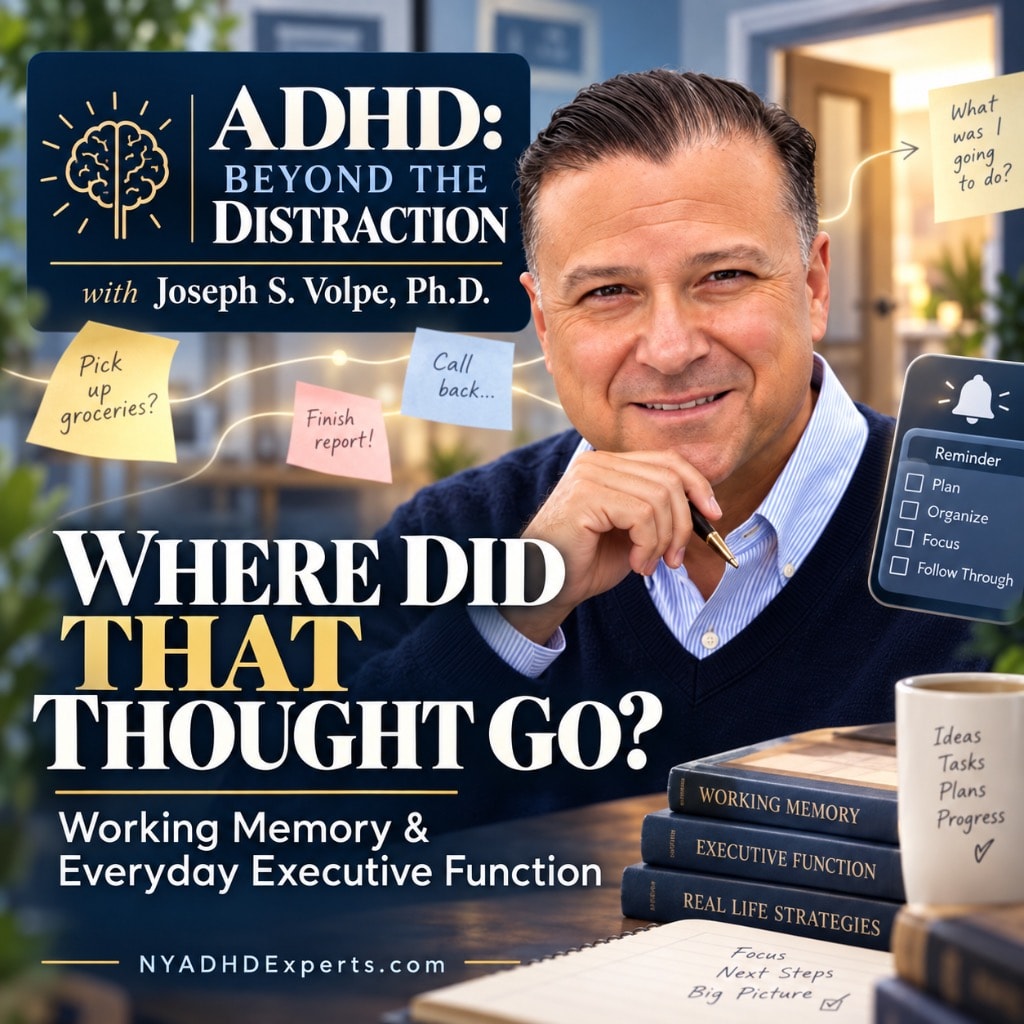
Where Did That Thought Go? Working Memory & Everyday Executive Function
Published by Joseph S. Volpe, Ph.D.
Working memory is the mental workspace we use to hold information long enough to act on it — and it is one of the executive functions most consistently affected in adults with ADHD. In this episode, Dr. Volpe explains why working memory difficulties show up as losing your train of thought mid-sentence, forgetting what you walked into a room to do, or struggling to follow multi-step instructions — and why these experiences are not signs of low intelligence or carelessness.
What You'll Learn
- What working memory is and why it matters for everyday functioning
- How working memory differs from long-term memory
- Why interruptions are especially disruptive for adults with ADHD
- How working memory deficits contribute to task-switching difficulties and lost trains of thought
- Practical strategies for compensating when working memory is unreliable
Episode Guide
Working memory is the mental workspace we use to hold information long enough to act on it — and it is one of the executive functions most consistently affected in adults with ADHD. In this episode, Dr. Volpe explains why working memory difficulties show up as losing your train of thought mid-sentence, forgetting what you walked into a room to do, or struggling to follow multi-step instructions — and why these experiences are not signs of low intelligence or carelessness. Through a listener question and a clinical example, he walks through how working memory operates, what happens when it is disrupted, and how adults with ADHD can build external systems to compensate for its limitations.
Key Takeaways
- Working memory is the cognitive system that holds and manipulates information in the moment — it is not the same as long-term memory
- Adults with ADHD consistently show working memory deficits that affect daily functioning across home, work, and relationships
- Interruptions are especially costly when working memory is impaired — the information being held is easily lost and difficult to recover
- Forgetting why you walked into a room, losing your train of thought, or missing steps in a sequence are common working memory failures, not character flaws
- External supports — written reminders, checklists, voice memos, and structured routines — compensate for unreliable working memory
Concerned about attention, memory, and executive functioning?
Dr. Volpe offers comprehensive adult ADHD evaluations by telehealth throughout New York State.
Schedule an EvaluationThis podcast provides general education and does not replace individualized assessment or treatment. If you have concerns about your attention, executive functioning, or mental health, please consult a qualified professional.